Inventory Management for Returns Resellers: The Complete Guide
How to track returns inventory from pallet to sale: article numbers, condition grading, photos, locations, and avoiding the dead-stock trap that kills margins.
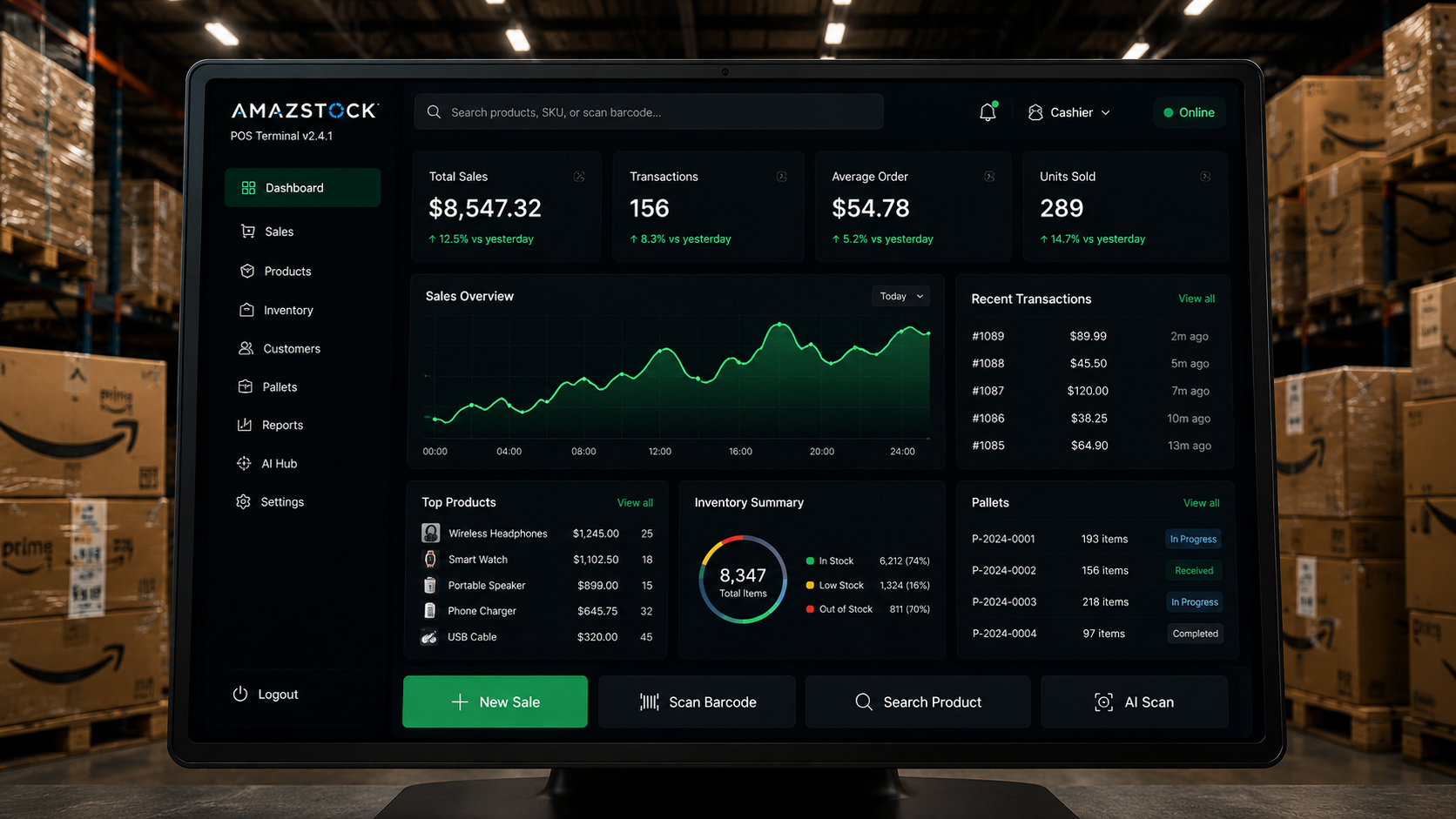
Sourcing gets the attention, but inventory management is what makes a returns business profitable. Every untracked unit is a future loss. This guide covers the system that keeps a growing returns operation under control.
Why returns inventory is uniquely hard
Unlike new-goods retail, every returns unit is a one-off: different condition, different completeness, sometimes no barcode. You cannot manage it with a simple SKU-and-quantity system. Each unit needs its own identity, condition and price.
The four pillars of a returns inventory system
- Unique article number per unit — even for identical models in different conditions.
- Condition grade — recorded at intake, visible at point of sale.
- Photos — real photos of the actual unit, not stock images, to cut returns and disputes.
- Location — a shelf or bin code so anyone can find the item in seconds.
Beating the dead-stock trap
Set a markdown ladder: automatic price drops at fixed aging thresholds. Inventory that will not sell at any price should be liquidated in bulk to recover space.
From spreadsheets to a warehouse system
Spreadsheets work for one pallet. By the third, you need a system that scans a unit, records condition and photos, assigns a location, prices it and lists it — without re-typing anything. Amazstock was purpose-built for returns: per-unit tracking, AI photo recognition, aging analytics and one-click multi-marketplace publishing.
Frequently asked questions
How do I track inventory for a reselling business?
Give every unit a unique article number, a condition grade, real photos and a location. Track aging so slow movers surface before they become dead stock.
What is dead stock and how do I avoid it?
Dead stock is inventory that has stopped selling. Avoid it with an aging report and an automatic markdown ladder that discounts items at 30/60/90-day thresholds.
Do I need warehouse software as a reseller?
By your third pallet, yes. Per-unit tracking, photos, locations and re-pricing become impossible to do reliably in a spreadsheet.