Multi-Channel Selling: List Once, Sell Everywhere
Why listing returns inventory across multiple marketplaces clears stock faster and at higher prices — and how to do it without overselling.
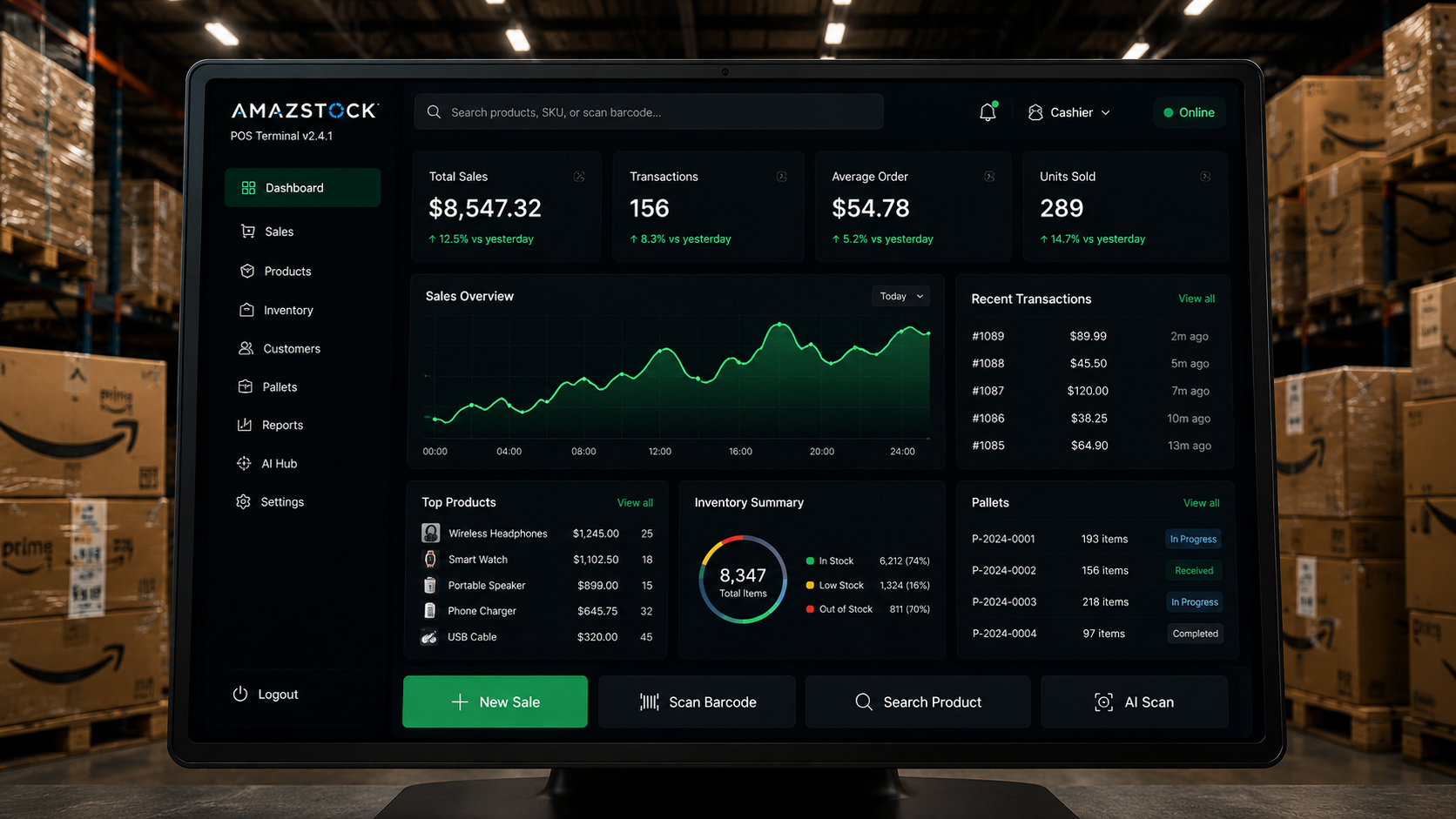
One marketplace is one stream of demand. For one-of-a-kind returns inventory, where every day in storage costs money, multi-channel selling is not optional — it is how you clear pallets quickly.
Why multi-channel wins
Each marketplace has a different audience and different demand peaks. The same item exposed on several channels gets multiples more views, sells faster, and often at a higher final price because more buyers compete for it.
The oversell problem — and the fix
How to run it without chaos
Manual re-listing on each marketplace does not scale. You need one record that publishes to every channel, syncs price and stock, auto-removes sold units, and funnels all orders into one queue. Amazstock does exactly this — list once, sell everywhere, manage from one place.
Frequently asked questions
Should I sell on more than one marketplace?
Yes — multi-channel exposure clears one-of-a-kind returns inventory faster and often at higher prices. The key is auto-removing sold units everywhere to avoid overselling.
How do I avoid overselling across channels?
Use a system that automatically deactivates a listing on every marketplace the instant the unit sells, and syncs stock in real time.